How I Ended up Reading this Book
I don’t normally read contemporary fiction. This is for several reasons, but the main one is that I don’t have a reliable standard of quality to judge if this or that work is worth it. I don’t trust bestseller lists and recommendations by mainstream magazines the same way I don’t trust Spotify’s Top 100 for new song recommendations. There are so many books to read in this world, and so little time, that I naturally fall back on tried-and-tested classics which, apart from being of a proven literary quality, have a period aspect to them that makes my curmudgeonly cold heart all that much warmer.
However, I am not entirely without self-awareness, and I know that this bias against contemporary fiction is a blind spot for someone interested in writing. As a kid I was much less discriminating, reading and learning much more from a random assortment of fiction and non-fiction than what I do now from my carefully curated study. While it flatters my ego to list Balzac or Turgenev as my “favourite” author when asked, it does little to grow my intellectual breadth and flexibility to arbitrarily restrict myself this way.
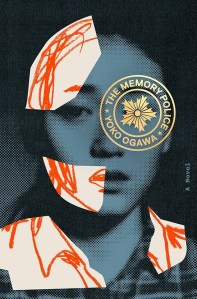
To rectify this problem I allocated to my reading quota a random contemporary fiction book picked from a bookshop shelf without reading any reviews or having pre-conceived notions. This is how I ended up with Japanese author Yōko Ogawa’s The Memory Police: I found it in the discount section of a famous used bookstore in York while browsing books on Gothic architecture.
From the cover and synopsis I surmised that this book was actually not such a leap from my comfort zone. Till recently I was a massive fan of Haruki Murakami – Ogawa’s compatriot – whose works are characterised by Kafka-esque, surreal, and supernatural themes interspersed in scenes of everyday life. In his strong works, like Hard-Boiled Wonderland and the End of the World, Murakami’s supernatural feels more real and poignant than everyday reality. He has that almost divine gift of making you feel that the book was written just for you, echoing the deepest truths of your life, opening a window to your soul to let all the dusty air out. While his latest novel, Killing Commendatore, is a derivative and uninspiring work that perhaps killed my love for his writing, it is still the only work of contemporary fiction I have read in two years.
Ogawa seemed to be cut from the same cloth: The Memory Police is about a strange island where everyday things disappear one by one for some unknown reason, and whose inhabitants must continue their lives while losing memory of them. The disappearance of things and the collective loss of memory of them is enforced by a mysterious and totalitarian “Memory Police”. The protagonist, a novelist, discovers that her editor is one of the few on the island who can remember the disappeared things, making him a target for persecution by the Memory Police. The story follows the novelist’s attempts to protect the editor while dealing with the successive loss of her own memories.
An intriguing premise, surely, but nothing too extraordinary in the land of surreal, Kafka-esquel, post-modern fiction. The cover announced that the book had been shortlisted for the 2020 International Booker Price, and that Ogawa had won “all major Japanese writing awards”, which should count for something, I thought. It was also fairly short in length (274 pages) and on discount. The most I could lose from this purchase was about six hours of my time and four pounds of my money – not the worst deal.
I read through the book in two evenings while dealing with a catastrophic journey back from Berlin, and found it engaging enough to write about it. I will not offer a plot summary as it bores me to write it; I suggest you read the book or head to Wikipedia if you’d like that. I want to be concise and forthright in my writing, and below you’ll find a short account of what I really felt about this book.
My Review
The most poignant and memorable parts of the book are the interactions between its characters, of which there are three main ones: the narrator, the old man, and the editor. Ms. Ogawa excels in bringing out the sensitivity, depth, and emotion in every quiet moment that is shared between friends, lovers, and family. It is clear that the author not only placed herself in the shoes of her characters but actually inhabited them for a long time, feeling and observing all that they would have, expressing their hopes, fears, and melancholy in a touchingly sad and knowing way.
An instance of this is the beautiful way in which she describes the relationship between the novelist-protagonist and the editor, emphasising how his gaze and physical presence filled the “space between their bodies”. It is almost painfully sensitive, and for those who have felt such emotions in their lives, it is a stark reminder of how we are prone to squander such precious moments thinking there will always be more. As the spectre of total annihilation of all memories haunts the characters, every meeting, every word, every gesture takes on infinite meaning and value. There is no need for the author to insert herself and moralize about the “value of being present”; it is obvious from the conceit of the book and the author’s masterful understanding and presentation of her character’s emotions.
To this superlative capacity for sensitivity and empathy, Ms. Ogawa marries the gift of description, which originates from a gift for observation. Every description of the world – of nature, tsunamis, earthquakes, burning books, little children – is crafted with utmost care and precision. Her prose is simple, the paragraphs short; the pace is brisk without long drawn-out tangents on philosophy or nature. Dialogue often precedes the description of a scene as it would naturally in the real world. The author respects the reader’s intelligence enough to let them, for example, connect the dots when the narrative switches from the main storyline to the meta-story of the protagonist’s novel: that of a typist who loses her voice and can only communicate by means of a typewriter. At the same time, she anticipates and addresses obvious questions a reader would have at exactly the right time.
The most touching aspect of the fait accompli of disappearing memories is how the characters, while losing their individual identities, find meaning and purpose through their relationships with each other. While the old man has long ago resigned himself to the disappearances he vigorously helps the narrator in her eventually futile efforts to resist the Memory Police and protect the editor. The editor, in love with the narrator, tries his best to help her retain memories, pointing to the fact that if an object exists physically, it can’t be “disappeared”. Once the disappearance begins to affect her body parts – starting with the left leg – he massages them vigorously to breathe into them life and feeling. And yet the narrator has the sad premonition that this is all for nought: little by little she herself will disappear and the body, while physically existing, will not retain anything of her. The novel ends with the narrator dissolving into a wisp of thin air, leaving the editor with her lifeless body as just another object from which memories have vanished – memories that he, unfortunately, can’t forget but can never experience again.
I did not much care about the themes of totalitarianism, social apathy, and feminism in the book. The central conceit of the book – that of an island whose inhabitants passively accept the total loss of the memories of their lives under subjugation by a fascistic system – is not developed or explained beyond what is required for its thematic and narrative purpose. The juxtaposition of two kinds of relationships – one between the narrator and her editor, and the other between the narrator’s meta-fictional protagonist (the typist) and her abusive typing teacher – was interesting as a contrast but not instructive for what I considered the book’s central premise. Perhaps other readers (possibly female) may find something in it to relate to.
Conclusion
Memory Police is a novel about what makes us human. Ms. Ogawa suggests that the mere physical existence of an object does not give it meaning if one can’t enter into a relationship with others through its use, a relationship defined by collective memories. It is the same with external markers of identity like professions, clothes, etc. Strip away all of these, and what remains? What we do for each other, what we mean to each other, what makes us want to live another day. While examples of this theme abound in the story, we get a small but unmistakeable hint early on while the disappearances are still infrequent and benign: the old man is the first to get the narrator’s novels and cherishes them greatly and yet, he doesn’t read them – on purpose. For him, the novels are a symbol of the love and respect the narrator has for him, not objects to be used for his own pleasure. He finds the thought of reading them sacrilegious.
Having read the book and meditated on it a while, I found the whole concept of the “Memory Police” unnecessary to illustrate the themes of the transience of memories and loss of humanity. Life by its very nature is transient; pain and loss follow happiness and pleasure on their heels. Moments of love, gratitude, and friendship pass by before we know it; we carry from them no more than memories and a desire to experience them again. Most of the things that occupy our lives are like the disappeared things in the novel: we won’t miss them when they’re gone. But what we will miss, what will cause us the most pain, are the moments of shared joy and grief that we let drift by on the river of our consciousness as we occupied ourselves with the things that eventually meant so little. A more relatable reality would have imbued Ms. Ogawa’s work with greater depth and poignancy, especially since the Kafka-esque world created by her is the weakest aspect of the novel.
While I found Ms. Ogawa’s world-building and plot too threadbare to take seriously, I found her gentle, unassuming prose, sensitivity, and vivid observations more than worthy of the time I spent reading this novel. It could be considered a bleak tale of dystopia that has some contemporary political, social, and environmental commentary; no doubt, the text encourages such readings as valid. I tried to ignore these themes and focus instead on what stood out to me the most: behind this story lay a heart that aches for the present to stretch into the infinity, for time to stand still, and for things of true worth to be valued. And for that, I felt I got a better deal than I expected.
 Sanchit Creates
Leave a comment