
I recently finished Honoré de Balzac’s Lost Illusions, one of the most popular works from his multi-volume magnum opus, The Human Comedy. Comprising three parts, it tells the story of two talented young men, David Séchard and Lucien Chardon, and their struggle to overcome poverty and establish themselves in the tumultuous and treacherous world of 19th-century France.
Lucien is the story’s primary protagonist, with David playing more of a supporting role, even though both receive the same literary space in the novel. This distinction is important: since it is finally Lucien’s actions that cause both his and David’s downfall, the correctness of our interpretation of the author’s intent and the novel’s themes, which constitute the moral lesson of the story, depends on correctly identifying this causal relationship.
Lost Illusions is not merely a study in morality; it is an exposition of a theory about the extent to which one is responsible for one’s destiny. This is well-trodden ground, the eternal question that goes back all the way to Sophocles’ Oedipus Rex, and certainly even earlier. To what degree is man responsible for his fate, and can he choose otherwise? How is it that a man may earnestly believe he is doing right his whole life, and still fail, while others around him succeed? Balzac pursues the same line of inquiry with Lucien as his tragic “hero”, but does he have anything new to say on this subject, other than resuscitating it for relevance the 19th-century?
Before I address this question, I will summarize the novel’s plot in the next few paragraphs for those looking for context. If you already know the story or are simply not interested, I invite you to skip ahead to the section titled “Two Paths”.
An Overview of the Plot
“My poor boy, like you I came here with my heart full of illusions, supported on by the love of art, swept forwards by an invincible yearning for fame … Don’t throw honour away, as I do, in order to live.”
Lucien Chardon is a provincial young man with a talent for poetry, whose late father was a chemist and whose mother is descended from impoverished nobility. He lives in poverty and is supported by his friend David, who has employed him in the antiquated printing press he recently acquired from his father under humiliating terms of repayment. The young friends detest this bourgeois life of boring hard work they have been condemned to and dream of escaping their circumstances by pursuing their passions for poetry and scientific innovation.
Lucien’s talent is discovered by Madame de Bargeton, an eccentric noblewoman residing in the same province who, afflicted by a misplaced sense of romance and idealism, pines for the intellectual and stimulating company of the beau monde of Paris. In Lucien she finds a vehicle for her own frustrated dreams of a poetic life, and they promptly fall in love; Lucien on his end sees the Madame as his benefactor and ticket to the high society of nobility and the arts, a notion she encourages wholeheartedly. It doesn’t hurt that this marriage of mutual interest and benefit is embellished by aesthetic compatibility, as Lucien is universally considered to be a very handsome man, and Madame de Bargeton is not devoid of obvious beauty that has resisted the passage of time and lack of refinement owing to the limitations of provincial life.
Circumstances conspire to bring them to Paris, where they lose the first of their illusions – the ones about each other. The eternal flame of the love they had proclaimed to each other back in the province is blown out by the first gale of Parisian refinement. The stars of their virtues that shown so brightly in the provinces fade into invisible specks in the galaxy of Parisian high society, proving that a star is only a sun in the domain of its own solar system. Their paths diverge irrevocably in the first few days of their ill-fated Parisian sojourn, and while the Madame obtains her passport to the beau monde via her highly-placed cousin, the Marquise d’Espard, Lucien is left to fend for himself in the poor quarters of the city.
Our hero must embark on his path to glory on the dint of his talent and luck in a Paris that swallows up dreamy newcomers like him by the hundreds. In this dog eat dog world, where morals and ideals have all the utility of cement bags tied to the legs of a drowning man, Lucien finds himself contending for mere survival, let alone glory and fame. What follows is a sordid tale of lost ideals, perverted intentions, and gloomy prospects, as Lucien makes a dramatic ascent to the peak of society and falls just as rapidly, culminating in a humiliating return to his provincial home in a state far worse than the one in which he left.
The drama of the last third of the novel returns to his native province of Angoulême, focusing on David’s attempts to avoid bankruptcy and debtor’s prison while fending off the schemes of his competitors, traitorous employees, and lecherous lawyers. While struggling with the consequences of his own idealistic nature, which is wholly incompatible with profitably running the business in the condition left by his father, David may have survived to invent his method of manufacturing radically cheap paper if not for Lucien’s immorality (on which anon), which like a disease infects not only the host but all those who remain in its proximity. Lucien’s desperate act of forging promissory notes in David’s name to pay off his debts is what brings his best friend and brother-in-law, and by extension his sister Eve (who David had married when Lucien left for Paris), to final ruin at the hands of their adversaries.
Two Paths
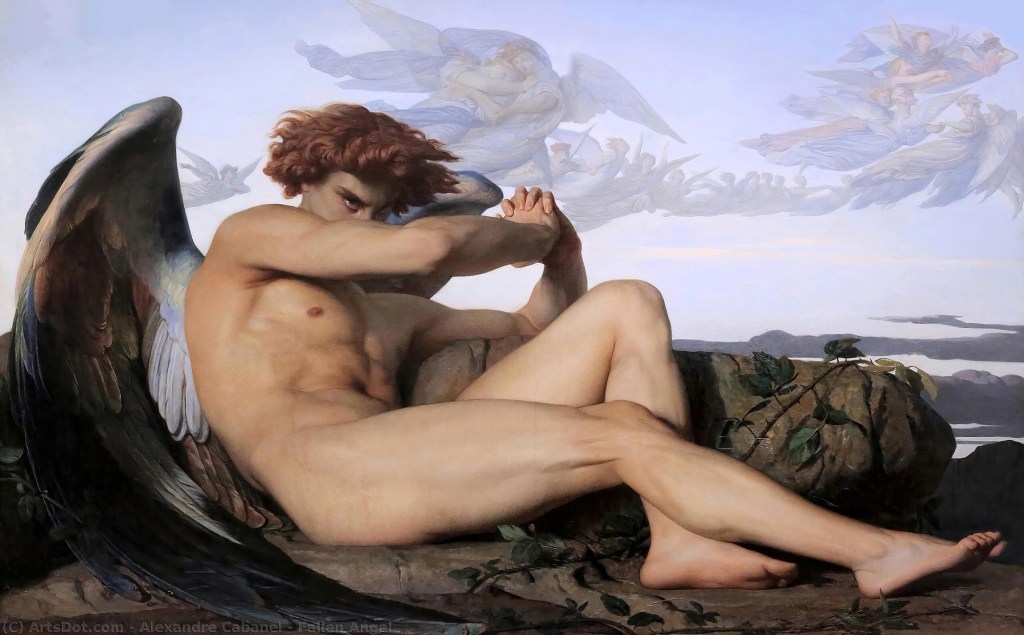
He did not know he had to choose between two different paths, two systems for which the Cénacle and journalism respectively stood: the one being long, honourable and certain, the other best with reefs, dangerous, fully of miry runnels on which his conscience was bound to get bedraggled.
“Before the cock has crowed three times,” said Léon Guiraud with a smile, “this man will have betrayed the cause of hard work for that of sloth and the vices of Paris.”
Heraclitus famously said: character is destiny. And one assumes Balzac agrees. In the opening pages of the novel, the author paints a complete portrait of Lucien and David, even as they are yet to embark on the missions that will define their lives. From these portraits itself the reader can surmise the conclusion; the only remaining matter of interest is the “how”. Lucien is described as one whose idealism and self-confidence, bolstered by his good looks and familial adoration, has entitled him to think of himself as a grand homme in waiting – an end to which he would not spurn immoral means and shortcuts if they became rungs on the ladders to success; whereas David is too naïve, self-doubting, and self-abnegating to fight for his ideals, choosing instead to believe that their innate purity automatically translates to superiority in the affairs of life.
While David is more of an organic whole and a passive figure, Lucien is fundamentally dualistic, containing within himself several schisms and contradictions which, due to their tension and conflict, motivate him to act but evade resolution because of his moral weakness, which emerges as the hallmark of his personality. Lucien considers himself superior to his humble circumstances, and blames only them – not any shortcoming in himself – for the gulf that separates him from greatness. However, in the fashion of Napoleon, he is convinced that this gulf can be bridged by any man who has sufficient daring and appetite for risk.
The problem, which Lucien in his naïveté and high self-regard does not perceive, is that the talent on which he bases this claim to greatness is fundamentally incompatible with the Machiavellian machinations required to achieve it. Politics and business may be paths to fame and worldly success if one is shrewd and fortunate enough, but art is a jealous mistress who must be loved exclusively, even on pain of destitution and obscurity. For the other characters in the story this is either not a choice at all, for they are predisposed to one or the other by their very nature and circumstances, or the choice has been made at some point in their past. It is now Lucien’s turn to choose, and Balzac gives his protagonist a fair chance to experience both options.
Shortly after his rupture with Madame de Bargeton, Lucien meets the austere and high-minded Daniel D’Arthez, a writer who has committed himself to his ideal, and thus also, to the mind-numbing and demoralizing poverty that necessarily results from this. For a while Lucien is enamoured with D’Arthez and becomes a part of the “Cénacle”, a group of similarly high-minded yet impoverished idealists in various fields who are steadfastly committed to the righteous path of merit and hard work, and who outright reject any compromise with society for glory and success. They share an unshakeable faith in the moral arc of the universe, convinced that today’s glory is bought at the price of eternal obscurity. It is not long, however, before Lucien tires of his unrewarding labours as part of the Cénacle and begins looking for that deadly compromise, whereby he can live a more comfortable life while still pursuing his passion. In so doing he makes the acquaintance of the unscrupulous journalist Etienne Losteau, the Lucifer to D’Arthez’s Gabriel.
Losteau, like D’Arthez, recognizes Lucien’s potential, but initiates him into an altogether different kind of cult – that of decadent Parisian high life, where one dates beautiful and promiscuous actresses, intrigues with journalists and printmakers to make (or unmake) the fortunes of politicians and writers, and uses morality as a tool for social climbing. In a matter of weeks Lucien, through his involvement in the journalistic circles of Paris, achieves the ultimate victory: he shows up even his former mistress – now a card-carrying member of high society – who had once been his only hope for such success, and who had spurned him so unceremoniously without even giving him a chance at ascension.
Living the life he always felt he deserved, Lucien naturally believes that all this is the result of his innate talents, and not due to external factors that made him an appropriate tool for accomplishing the ambitions of others. Ironically, it is Losteau’s envy and fear of Lucien’s nascent talent that makes him take on the garb of the latter’s benefactor to corrupt and eventually neuter the unsuspecting youth. Such is the common theme of all Lucien’s interactions on his descent to purgatory: our hero feels he has the best of every interaction while his adversaries are content to let him have his illusions, knowing that the house always wins in the long run. It is not a coincidence that gambling comes up frequently as one of Lucien’s many follies during this time, for it perfectly encapsulates the nature of the game he is playing, which has strayed far from any relationship with talent, idealism, and poetry.
A Lesson for Poets
“Intrigue is superior to talent: it makes something of nothing, whereas most of the time the immense resources of talent only serve to make a man unhappy.”
“It costs a lot to become a great man. The works of genius are watered with its tears … Society rejects defective talent as Nature sweeps away misshapen creatures. Whoever wishes to rise above the common level must be prepared for a great struggle and recoil before no obstacle. A great writer is just simply a martyr whom the stake cannot kill.”
The causes of Lucien’s downfall are many, and in arriving at his tragic conclusion Balzac traverses the vast territories of all moral philosophies that are concerned with what motivates man’s actions and thus decides his destiny. Social and economic causes – what Dostoevsky calls “environmental factors” – such as poverty, provincialism, inequality of resources and status, the absence of meritocracy in the recognition of talent, the temptations of urban sophistication and the decadence of civilization, etc. are investigated thoroughly in the novel, and given their appropriate place in Lucien’s story. All these factors culminate in society’s process of unnatural selection, whereby the least deserving are rewarded with success at the cost of the truly meritorious; this is a central theme of the novel.
And yet, this is only a necessary, and not sufficient cause of Lucien’s tragedy, since he is not uniquely impacted by them. Moreover, Lucien is rid of these illusions fairly early on in his career, early enough for him to be able to choose his path. And this is where the crux of Balzac’s moral theory lies. Lucien’s character becomes his destiny by the choices it compels him to make at every turn.
Lucien’s tragedy would be lamentable had he remained steadfast to his ideals and still be defeated by society. But this is not so. Whatever is innate to him – his good heart, poetic talent, idealism – is sooner or later sacrificed to the Gods of convenience, indulgence, and comfort. Ironically enough, while it is these innate qualities that make him initially valuable to those who eventually betray him, he is punished for using or demonstrating them once he is on the path to corruption. He finds that his virtues no longer serve “him” if his interests ever diverge from those of his benefactors.
On the other hand, his vices, his impatience for success without wanting to put in the effort, his air of superiority and entitlement – it is these that his devious adversaries exploit to first, use him for his own ends while rewarding him with little, and second, to discard him once his purpose is served. He is so bound by his own ambitions and so dependent on others that he can’t even choose who he loves: when he spurns his former lover Madame de Bargeton a second time in favour of the actress Coralie, he loses forever his only chance at claiming his mother’s noble title for himself – an objective that had become a matter of life or death for him.
This is not to say that in being punished for his vices, Lucien is being made to heed some a priori superiority of virtue in the affairs of the world. Balzac avoids this “happy ending” for which, perhaps, this otherwise melodramatic story is considered a masterpiece of realism. What Lucien had to learn is that artistic talent, and its corollaries: idealism, sensitivity, righteousness, and conscience, are a burden, a cause of eternal suffering that must be endured for their own sake, and can not be justified in terms of material success. Indeed, this is the only opinion that all of Balzac’s characters share – no matter which side of the moral spectrum they are on. The only question they differ on, the question posed to Lucien, is this: now that you know the truth, what will you do with it?
The lesson, then, for a poet – understood largely as a man possessing artistic skill and temperament – is that he must adhere to these virtues out of necessity, as being the results of a higher calling, and in so doing eschew any concern for fame and glory. He must, of course, maintain himself somehow, but only to the degree necessary to keep his pursuit of art going. Fame and success will eventually find him, should he develop his skill to the necessary degree by following his heart; and if it doesn’t catch up with him in his lifetime, posterity will surely unearth his greatness for all to see.* And in the meantime, he has no option but to carry in his heart “Genius … the terrible malady … that monster which devours all feelings like a tapeworm the moment [he] is born …”.
*Balzac writes a happy ending for D’Arthez, who pursues his path of morality and righteousness till the end, and becomes a celebrated writer much ahead of schedule – in fact, in the exact timeline in which Lucien crashes and burns. This seemed to me to be unrealistic and undermining the lesson the author is teaching. In fact, throughout the novel it is acknowledged by Lucien’s contemporaries that D’Arthez will eventually achieve fame as a writer, only in a matter of years where Lucien has arrived in weeks. This presentiment also works against the overall cynicism about the literature trade Balzac devotes so much of the book’s 600-plus pages to. It would have been preferable had D’Arthez’s chances remained a mystery, for his morality and personality are sufficiently attractive on their own terms.
 Sanchit Creates
Leave a comment